
I know, this took me several months longer than I intended but finally, here’s the first in my Take Back Your Tech series.
Even though I am not always the most communicative person, I have been fascinated by radio since I was a little kid. Of course, it helped that for much of my childhood my father had some sort of ham or Citizen Band radio around. We even had broadcast receivers, though my father listened to talk radio, mostly news, more than music. I didn’t find out for decades that he really was tone deaf, a condition I still don’t really understand because my life has been so focused around music in some way since I was given a transister radio when I was about or 9 years old.
Sometime in the late 1970’s the power of the portable phone was illustrated to me by my father who was an Amateur Radio licensed operator, since sometime in the early- to mid- 1960’s. Our vehicle had broken down along a very rural highway. I still have the image in my head of us standing along the two lane road when my father demonstrated a technology called the phone patch with his hand held two-way radio. He was able to activate the telephone patch with the keypad on the front of the radio and then dial a phone number. The phone call went out over the then ubiquitous landline telephone system. My father was able to call a friend of his who was then come find us three and drag us home where my father could then pick up the tools that he needed to fix whatever was wrong with our car.
I never forgot that incident but it was not until 2000 when I acquired both my own Amateur Radio license as well as my first cellular phone. By that time, many Amateur Radio repeaters no longer operated telephone patches but cellular phones were just beginning to take hold. What really drove me to get a cellular phone was moving to a much larger town, a suburb of Sacramento, which had about 90,000 residents and a decreasing number of working payphones. In fact, as an experiment, I walked around a nearby shopping area for two hours because at first I wanted to make a phone call, and then because I was fascinated and mildly disturbed by the lack of functional payphones in the area. At the end of that meaner, I was standing in the neighborhood RadioShack buying my first cellular phone. Yes, I was rather a fan of RadioShack at the time and even bought a few radios from them.
Several years earlier, my father had purchased a car phone which he used for his real estate business. He would call me from time to time on the phone and the quality was highly variable but was usually somewhere between noisy but intelligible to unsure if the caller was even speaking English or octopus. The early cell phones where a significant step up from that, for me, but I also rarely called someone while travelling at 70 mph down the freeway.
There are people who can talk more intelligently about the why of this, but no, driving down the road at expressways speeds does not sound as good as when you’re stationary and it’s not just because of road noise.
My fascination with radios transferred easily to cellular phones and what people could do with them. Cellular phones are amazing little radioactive devices. Each cellular phone contains several radios which do very specific tasks and each radio has it’s own quirks, functions and restrictions. I’m not going to talk about any of those radios directly though, not in this article anyway. However, what I will talk about does concern one of the radios that must be in every cellular phone because without this one radio, it would simply me a small, less easy to use pocket computer.
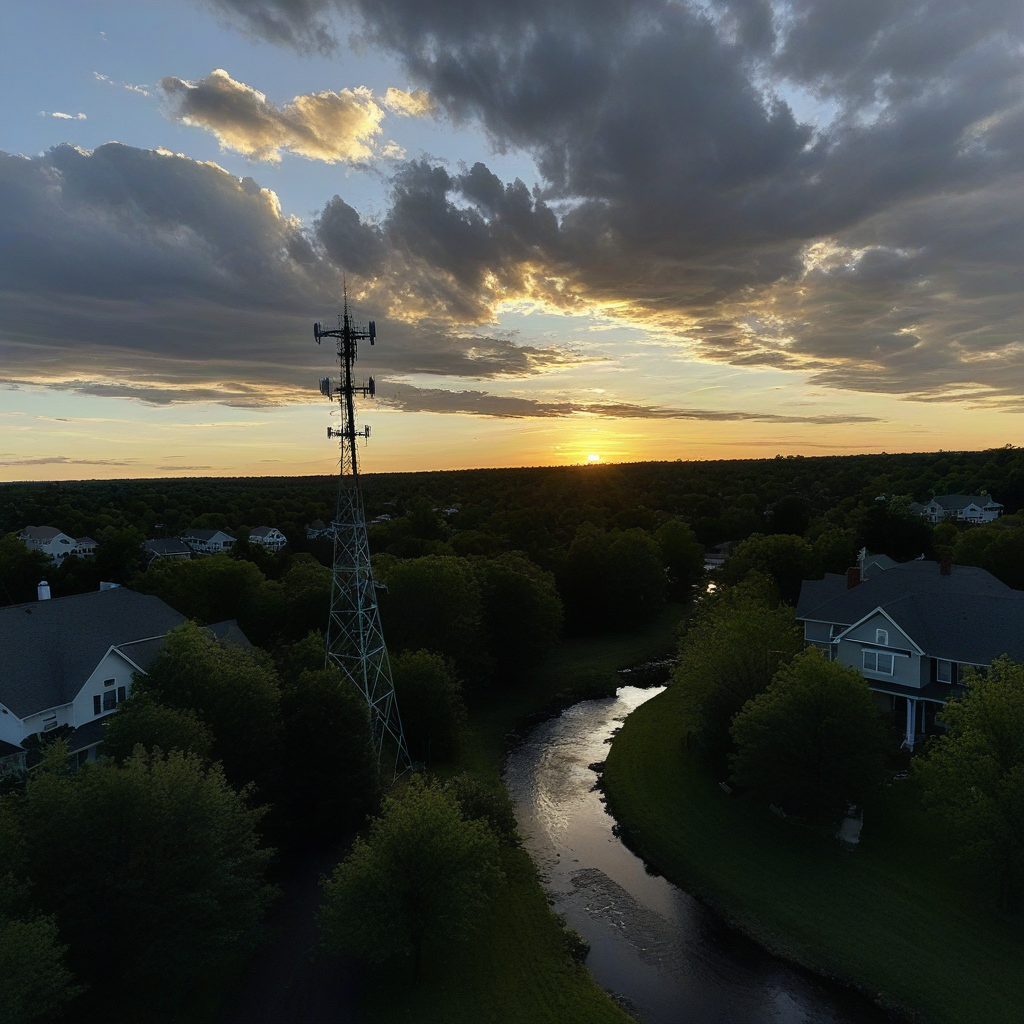
What I’m talking about is the cellular modem that connects to cellular repeater towers, called just cell towers by most people, and receives your voice, text and cat videos converts that data the Internet to our friends, family and stalkers all over the world, and sometimes those towers actually successfully sends us data back. Really, the cellular modem does the same job as the telephone patch the I saw in action in the 1970’s, but instead of sending our voice in the clear over Amateur Radio frequencies, the cellular modem converts everything we send into data, addresses it just like a telephone switchboard, and ships it off to where we want it to go, or at least we hope it only goes where we want it to go. Although, really, your phone is technically transmitting in all directions and any cellular repeater towers in range pick up on the signal and then handles your data.
Here is the first point I want to make. Some people act like their cellular phones somehow make a magic wired connection between their handset and the cellular tower. In reality the handset in your purse, pocket or strapped to your dashboard is really blasting signals to everyone around who happens to have the technology to receive the signals. Cellular towers are no different, really. With the exception that the towers have several stacks of directional antennas which cover a specific part of ground around. Have you ever wondered how police shows seem to know where people are? That’s how. Of course, that information is usually a lot harder to get than they make it look, but that’s even before we talk about the handset itself and its constant monitoring of both cellular tower signals and the ever-present GPS network.
So, lets talk a little bit about those cell towers. When cellular service was young, these towers were few and far between. Over the decades however cellular providers have put up more and more towers. Of course, the greatest density of towers were put up; where the most customers were going to be, in cities, then along major travel corridors and travel destinations. Only large companies could afford to build, buy or maintain these towers so only a few companies won out. That is one reason there are so few cellular companies.
Don’t be confused by smaller regional or specialty companies. They piggyback on the same infrastructure that these large carriers maintain. Very few of them now own or maintain their own equipment because of the economies of scale. The reason they can give you cheaper cellular service is that these companies can charge you less because they are not paying for the infrastructure that makes the system work, as well as the large profits which these large companies use to pay their CEOs and shareholders. That does not mean that their services will be any better than the big companies, and while you might have a local retailer to walk into and yell at a local face, these companies rarely provide you any more advantage than that. Okay, sure, you feel like you’re avoiding paying the large carriers but the truth is, you’re still paying them, just through a middleman. A middleman who may have less control over your data than a larger carrier with more to lose.
My point is, even before we get to all the data which we share to be allowed to use these awesome little devices, there’s a lot of data that’s automatically linked to you by your phone number, because your phone’s identificatin number is linked directly to your phone number in their database. This data goes through only a few throttling points, some people call them chokepoints, and that makes it easy to both monitor and control the flow of data, even if they can’t actually decode what you’re sending ore receiving. Just keep that in mind. Scary? Depends on how you look at it. This data helps them to decide where to put new towers, when to upgrade towers, where to put stores and a whole number of other business related decisions which make our cellular phone experience better, in theory.
As I mentioned though, then they have all our account data. Name, address, one or more phone numbers, family members, identifications of any devices that might be linked to your account, usage and then tie into all that data that’s from the cellular towers. Oh, and enough financial information and access so that they can pay themselves with your money. That’s an amazing amount of personal data that we’ve given to them, no, that we pay them to keep on us. Sure, some of us remember needing to fill minutes with cash at a store. That felt a little safer, but that required actual work to go to a store, to have cash, take time out form stuff you were doing otherwise. It wasn’t convenient, so many of us were quite happy to give the companies more information, including credit or debit card access numbers. Yes, the cash only phone minutes died quickly because it allowed people choice. If they weren’t going to use their phone for a month, they just didn’t go in and buy time. Of course, the reason that everyone talked about though was that too many criminals were using this untraceable cash transaction to pay for phone time that they would then to conduct illegal activities.
All that data is important and useful. There are good reasons for the carriers to have it. However, companies aren’t here to do good things for us, they’re here to make money for their shareholders. So, they decided that they would sell bits and pieces of our data. Sure, at first a lot of it was anonymized, depersonalized. This data helped other companies make more money off us, usually in making better ways to advertise to us. As much as I hate directed advertising, there’s not much I can do about it, except for what I usually do, totally ignore it.
You would think that companies would take their data storage seriously but it’s been shown again and again just how lax some companies are. Hackers get in, steal all sorts of user data, and then often enough they get paid for it. This is one of the biggest problems I have with these companies. Okay, sure, I pay you to make money off of me, just so I can carry around a communication device that lets me keep in touch with almost any person I’d ever want to communicate with. Yay! Yet, you can’t even keep the data you make money off of safe? Booo! Then, on top of that, you have to pay hackers to regain control over your computers? Double-booo! Would we tolerate some unknown surgeon slipping in and cutting out our kidneys? If I had any say over it, I certainly wouldn’t allow it. Like your kidney, once your data is out there, it’s not coming back.
Hackers aren’t the only bad actors though. The companies themselves can do some really wrong things. For the first time in our history, Americans have been exposed to overt actions by our own government which puts a lot of our personal data at risk. Yes, there are valid reasons for governments to have access to data, especially when it comes to solving or preventing crime. The government however shouldn’t be involved in actively perpetrating the crime.
You could argue that we don’t really have a choice if we want this convenience. We always have a choice but it all depends on how much work you want to put into your own communication infrastructure or how much you want to spend on it. We don’t need these phones but they certainly make some things nice, and sometimes they just make it easier for us to get addicted to social media. That though is another article.
References:
Location data / FCC fines
https://therecord.media/fcc-fines-carriers-selling-customer-data
Bounty hunters / Wyden Senate press release
T-Mobile breach history
https://www.harmreport.com/lawsuits/data-breach/t-mobile
CALEA / Salt Typhoon
https://stateofsurveillance.org/articles/government/calea-backdoor-law-broke-telecoms
https://www.eff.org/pages/calea-faq
SS7 / Citizen Lab
